Last updated ·
Tea leaf reading: how to read the leaves in your cup
Tea leaf reading means drinking a cup of loose tea, swirling what's left and reading the shapes the leaves make on the walls. Here's how to do it at home: the right tea and cup, the swirl and drain, where to look, and what the common shapes mean.
What tea leaf reading is
Tea leaf reading is the tea side of tasseography, the old practice of reading cups. The name joins tasse, French for cup, to the same Greek ending you know from geography. It took hold in Britain and Ireland in the 1800s, once tea was cheap enough for every kitchen and long before tea bags. Every cup had leaves at the bottom, so people looked.
The setting was a kitchen table, not a velvet parlor: a pot of strong black tea, a cup handed across for a second opinion. That's still the right way to think about it. A close look at a cup and a chat about what's on your mind, not a verdict.
Coffee has its own version. In places like Turkey, where tea comes strained into small tulip glasses, coffee is the cup that gets read. The two methods share most of their logic, and the coffee cup reading guide covers the other one.
Which tea and which cup
Tea bags are out. The tea inside is cut so fine that it settles into silt with no edges to read, and slitting a bag open doesn't change that.
- Loose leaf, medium cut. A broken-leaf black tea, like a breakfast blend, Assam or Ceylon, has pieces small enough to scatter and big enough to draw a line. Large whole leaves unfurl into clumps.
- About half a teaspoon. Too many leaves and the cup turns into a forest. Too few and there's nothing to connect.
- No strainer. Brew the leaves right in the cup, or pour from the pot without a strainer so the leaves come along.
- A wide, pale cup with a saucer. A white or cream teacup with sloping sides. In a deep mug the leaves pile up at the bottom, and in a glass they vanish against the table behind it.
The ritual, step by step
- Brew and pour. Let the tea steep for a few minutes, then pour it, leaves and all.
- Drink, but not all of it. Stop when about a spoonful is left, with the leaves sitting in it. If you have a question, keep it in mind while you drink.
- Swirl three times, clockwise. Keep the cup upright, hold it by the handle and turn it in three slow circles, so the last of the tea washes the leaves up the walls. Old instructions say to use your left hand. Your right won't mind.
- Drain. Turn the cup upside down onto the saucer and leave it there for a minute while the liquid runs out.
- Turn it back and look. Lift the cup, set it upright and hold it with the handle toward you. Whatever stayed on the walls is your reading.
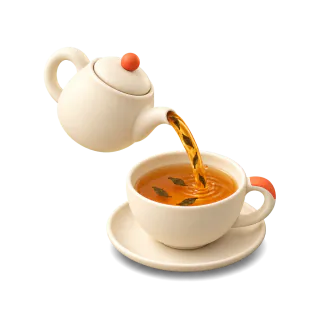
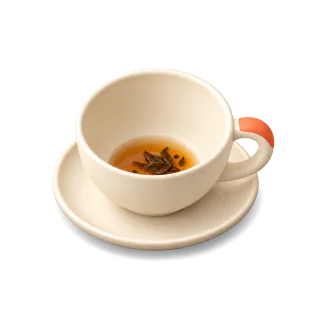
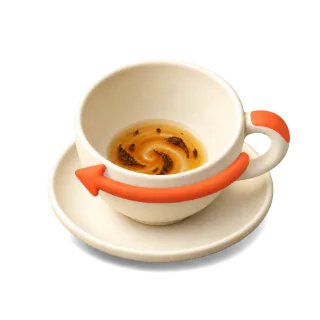
The swirl does real work: it lifts the leaves out of one heap and spreads them up the walls, where the zones are. Skip it and you get a pile. Go wild and everything sticks to the rim.
How tea leaves differ from coffee grounds
If you've read coffee cups, tea will feel familiar, with a few differences worth knowing.
- Pieces, not sludge. Grounds dry into smeared outlines. Leaves stay separate, so a shape is a cluster: a dozen leaves that together make a bird. Single leaves and stalks count as dots and lines.
- No waiting. A coffee cup sits upside down until it cools. Tea is ready to read as soon as it drains.
- The bottom means the long run. In coffee, the floor of the cup holds the past and what sits in your heart. In tea it speaks to the long run: whatever is building slowly, over many months.
- The saucer just catches the drips. Coffee readers save the saucer for last. In tea it's only there to drain the cup, and Skycup doesn't read it.
- Stalks have their own lore. British kitchen lore says a stalk floating in your tea means a visitor is on the way. That one gets read before the first sip.
Where to look, and what the zones mean
Hold the cup with the handle toward you and start there, since the handle side stands for you. Go round and work down, rim to floor, turning the cup slowly as you go.
Look for clusters with a clear outline against white porcelain. A shape counts if someone else can see it once you point at it. Big and crisp reads louder than small and scattered. Shapes sitting side by side get read together: a ship next to a letter is news from far away. Two to four clear shapes make a full cup.
| Zone | Where it is | What it speaks to |
|---|---|---|
| Rim | The band just inside the edge | Soon, within days |
| Upper wall | Just below the rim | The coming weeks |
| Lower wall | Down near the floor | A month or more away |
| Bottom | The floor of the cup | The long run |
| Handle side | Right beside the handle | You, home, family, your closest people |
| Far side | Straight across from the handle | Other people, work, the outside world |
So an anchor near the rim is something settling this week, while at the bottom it's the steady base you're building for the long haul. Beside the handle it's home that feels steadier; across the cup it's work. Read timing as a tendency. "Soon" is not a date.
Common tea leaf symbols and meanings
Skycup reads 46 shapes in all. These eighteen show up nicely in leaves, each in one line. The symbol dictionary has the rest, with what each one means in every zone. Old tea readers also hunted for initials and numbers; Skycup sticks to its shapes.
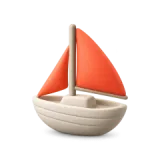
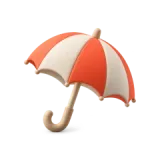
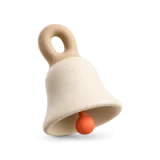

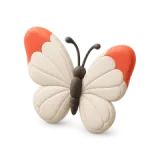
- Anchor: stability. Whatever felt shaky is about to settle.
- Ship: a longer trip, or something arriving from far away.
- Umbrella: cover. Open, you're well looked after; closed, go easy on what you promise.
- Bell: an announcement, good news you hear before everyone else does.
- Star: a wish with a decent shot. Five points lean on luck; more points lean on effort.
- Butterfly: a change you'll like, with a little flirting on the side.
- Candle: a new idea, or a bit of hope in a slow week.
- Clock: timing matters. The perfect moment isn't coming, so pick a good one.
- Feather: lightness. Something heavy gets easier.
- Flag: a note to read carefully, or a win worth announcing.
- Arrow: a clear direction. Pointing up is a yes; pointing down is not this one.
- Dots: a busy social stretch, or small things adding up. Scattered single leaves are often read this way.
- Lines: progress. Straight lines are plans working; wavy ones ask for patience.
- Egg: a new plan that needs some warmth before it shows anything.
- Owl: good sense, and a late-night talk that changes your mind.
- Hand: help on offer. An open palm says take it; a fist says someone needs convincing.
- Door: a threshold. Open is an invitation; closed means not yet, not never.
- Cat: independence, and someone playing it cooler than they feel.
How Skycup reads tea leaves
Skycup, coming soon to iPhone and Android, reads tea the way it reads coffee, with the tea rules for the bottom and the saucer.
The cup map. Pick tea, shoot the inside of the cup from straight above and send it. Skycup checks the photo first. Strained tea with no leaves gets turned down, and so do coffee grounds sent as tea (one tap switches them to coffee). Neither costs you a reading. Then Skycup finds the clearest clusters and pins each one on your own photo with its zone, like ANCHOR · UPPER WALL, so you can see exactly which leaves it means.
Your chart and the sky right now. Your birth chart is worked out on your phone: Sun, Moon, rising sign and twelve houses. The rising sign and houses need a birth time; for a head start, try the rising sign calculator. Each reading uses the sky at the minute you send the cup, so a ship on the far side reads one way in an ordinary week and another while Mercury crosses your 9th house, the one about travel and faraway places.
Did it happen? Every reading picks one everyday thing to keep an eye on, timed by its zone. When it's due, the app asks: yes, partly or no. Your answers turn into your own record of which shapes keep coming back in your cups and how they played out.
An honest note
The leaves in your cup are real, and so are the shapes Skycup pins on your photo. The sky is real too, computed for the minute you send the cup. The meanings are another story: they come from an old tradition, put into words by AI. A reading is for fun and a little reflection, not advice, and anything about health, money or the law deserves someone who can look at your actual situation.
Questions
Can you read tea leaves from a tea bag?
Not well. Bag tea is cut so fine that it settles into silt. If bags are all you have, enjoy the tea and save the reading for another day.
What's the best tea for reading tea leaves?
A loose black tea with a medium, broken leaf. Green and herbal teas work too if the pieces are small. Big rolled leaves, like many oolongs, open into clumps too large to make shapes.
Why swirl three times?
It's tradition, and it happens to work: three slow circles move the leaves up the walls without flinging them all to the rim. Clockwise is the custom. Skycup won't check which way you went.
Do I need a saucer?
Yes, to drain the cup. Turn it over onto the saucer, wait a minute, lift. Unlike in coffee, the leaves left on a tea saucer aren't part of the reading.
How is tea leaf reading different from coffee cup reading?
Leaves cluster where grounds smear. Tea is read right after draining, coffee only once the cup cools. And the bottom of a tea cup speaks to the long run, where in coffee it holds the past. The coffee cup reading guide has the full coffee ritual.
Can tea leaves tell the future?
Nobody has shown that they can, and Skycup doesn't claim it. The shapes are there to see; what they mean comes from tradition. Use a reading to think about what's coming up for you, and let Did it happen? keep score.